

The ideal breast rests elevated above the inframammary fold (the natural crease beneath the breast), with the nipple positioned so that breast volume is distributed roughly equally above and below it. In a well-proportioned breast, the nipple sits at or slightly above this crease line.
Over time, factors such as weight fluctuations, changes in tissue volume, pregnancy, breastfeeding, inadequate support, and gravity can cause the breasts to sag (a condition known as ptosis). In more advanced cases, the nipples point downward, and the bulk of the breast tissue drops below the inframammary crease. For patients who want to improve significant breast sagging, a breast lift – medically known as mastopexy – may be an appropriate surgical option.
Patients often seek a mastopexy to address age- or life-related changes, while others have experienced naturally sagging breasts for as long as they can remember. A primary concern for many patients considering this procedure is post-surgical scarring, which we will explore in detail below.
Dr. Tracy Pfeifer is a double board-certified plastic surgeon specializing in aesthetic plastic surgery, with extensive experience in breast surgery. In her New York City and Quogue practices, she approaches breast lift surgery with an emphasis on individualized planning, natural-looking proportion, thoughtful scar placement, patient education, and long-term breast support.
What Is a Breast Lift, and What Does It Actually Do?
A breast lift (mastopexy) reshapes and elevates sagging breasts by removing excess skin and repositioning the underlying breast tissue along with the nipple-areola complex. It is important to note that a lift changes the position and shape of the breasts, but it does not significantly add volume.
The extent of the surgery depends on your individual anatomy, including the degree of sagging, skin elasticity, nipple position, and natural breast shape. While some patients achieve their goals with a lift alone, others benefit from combining a lift with breast implants to add volume or fill out the upper part of the breast.
A simple way to decide if an implant might be right for you is to consider two questions:
- Are you satisfied with your overall breast size when wearing a padded or push-up bra? If you like your size in a bra but feel deflated without one, a lift alone usually provides the desired result.
- Are you looking for enhanced upper-pole fullness or prominent cleavage? If you desire more dramatic volume or cleavage, combining your lift with an implant (augmentation-mastopexy) is often the best solution.
- A breast lift may improve:
- Breast sagging
- Low nipple position
- Stretched skin
- Overall breast shape and proportion
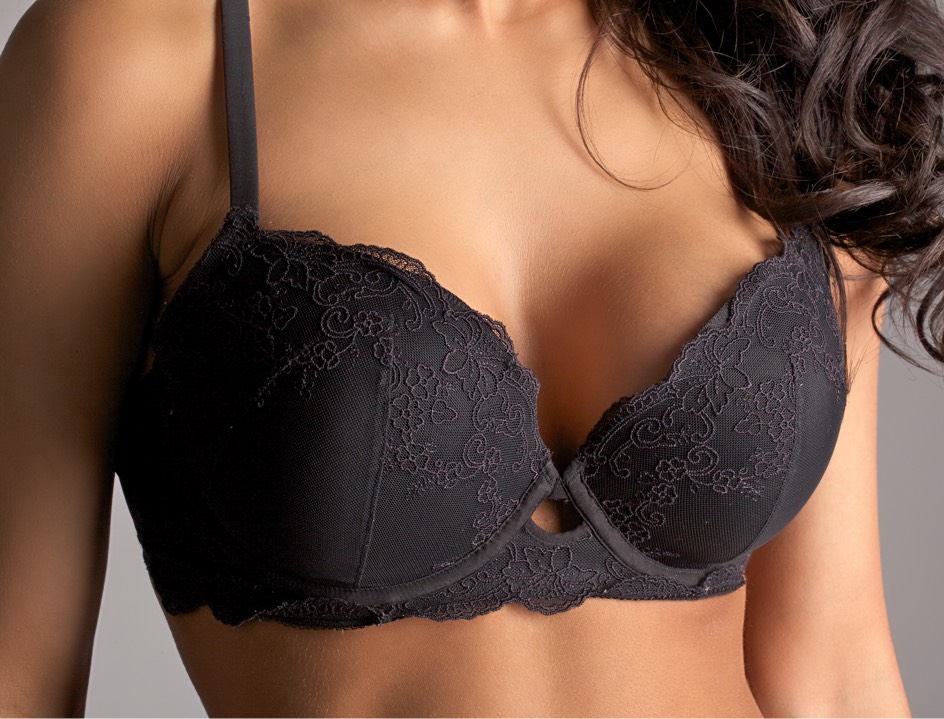
Breast Lift at a Glance
A breast lift (mastopexy) is a breast surgery procedure designed to reshape the breast, eliminate skin laxity, and restore a higher, more youthful profile. While a lift on its own improves breast position rather than adding cup size, implants can be incorporated during the same surgery if increased fullness is desired.
To elevate sagging tissue, the surrounding skin envelope must be reduced by trimming away the stretched, redundant skin. The degree of correction required dictates the technique and resulting incision pattern:
- Minor Lifts (Periareolar Incision): For slight elevations – such as raising the nipple-areola complex by roughly 1.5 cm – a circular incision around the perimeter of the areola is often sufficient, leaving a discrete scar along the border.
- Moderate to Significant Lifts (Lollipop/Vertical Incision): When both the nipple and underlying breast tissue require substantial elevation, additional skin must be removed, resulting in a vertical incision extending down from the areola (a “lollipop” pattern).
- Significant Lifts (Anchor/Inverted-T Incision): For extensive tissue repositioning, an added horizontal incision along the inframammary fold creates an anchor pattern to secure the new shape.
While surgical scars are permanent, they often flatten, soften, and fade with time. Scar appearance varies according to incision pattern, skin type, individual healing, and postoperative care.
At a glance:
- Procedure: Mastopexy
- Purpose: Lift and reshape sagging breasts
- Volume: Does not significantly increase breast size on its own
- Scars: Depend on the amount of correction required
- Recovery: Gradual return to activity over several weeks
What Are the Benefits of Getting a Breast Lift?
A breast lift can improve breast position, shape, firmness, and nipple placement when sagging is the main concern. It can also create a more balanced relationship between the breast mound, nipple, and chest.
For some patients, reshaping the existing tissue is enough to create a more youthful breast contour without implants. Others may want a lift combined with augmentation when both sagging and volume loss are present.
Potential benefits include:
- Higher breast position
- Improved nipple position
- More compact breast shape
- Better breast symmetry
- Improved overall proportion
Do I Need a Breast Lift or Breast Implants?
You may need a breast lift if the main issue is sagging, while implants may be more appropriate if breast position is favorable but volume is lacking. When both breast position and fullness are deficient, a lift with augmentation may be considered.
This distinction is important because implants add volume but do not correct significant sagging. A lift improves breast position but does not substantially increase size.
As discussed above a simple way to decide if an implant might be right for you is to consider two questions:
- Are you satisfied with your overall breast size when wearing a padded or push-up bra? If you like your size in a bra but feel deflated without one, a lift alone usually provides the desired result.
- Are you looking for enhanced upper-pole fullness or prominent cleavage? If you desire more dramatic volume or cleavage, combining your lift with an implant (augmentation-mastopexy) is often the best solution.
In general:
- Lift alone: Adequate volume with sagging
- Implants alone: Low volume with favorable nipple position
- Lift with implants: Sagging plus volume loss

Who Is Dr. Tracy Pfeifer, and What Is Her Approach to Breast Lift Surgery?
Dr. Tracy Pfeifer is a double board-certified plastic surgeon with a professional focus on aesthetic breast surgery. Her approach emphasizes individualized treatment planning, natural-looking results, proportion, tissue support, and careful consideration of scars.
Dr. Pfeifer evaluates each breast independently and considers skin quality, nipple position, tissue volume, asymmetry, and long-term goals before recommending a technique. Her goal is to create a refined breast shape that fits the patient’s anatomy rather than applying one standard operation to everyone.
Her approach emphasizes:
- Individualized surgical planning
- Natural-looking breast shape
- Thoughtful scar placement
- Patient education
- Long-term support
Call Us Today
Manhattan: 212-860-0670
Hamptons: 631-653-6112

What Happens During My Breast Lift Consultation?
Your consultation begins with an open conversation about your personal goals – what you would like to improve about your breasts and what kind of result feels most natural to you. During the evaluation, Dr. Pfeifer carefully assesses your breast volume, nipple placement, skin elasticity, natural asymmetry, and fold position, as well as whether you would like to add fullness.
For patients seeking to restore changes that have occurred over time, Dr. Pfeifer often recommends reviewing earlier photographs – such as pictures in a swimsuit prior to pregnancy or weight shifts. Comparing these photos helps her gain a clear, precise understanding of your ideal aesthetic vision and guide your customized surgical plan.
Every consultation is a collaborative process designed to define your personal aesthetic vision:
- Defining Your Goals: We begin by discussing the specific enhancements you wish to achieve and what a natural, balanced look means to you.
- Comprehensive Assessment: Dr. Pfeifer performs a clinical evaluation examining key anatomical factors:
- Breast volume and fullness goals
- Nipple-areola position
- Skin elasticity and tissue tone
- Natural asymmetry and inframammary fold placement
- Establishing Your Baseline: If your breasts have changed over time due to aging, pregnancy, or weight shifts, bringing in previous photos (such as swimsuit pictures prior to these changes) gives Dr. Pfeifer a visual reference point to align surgical technique with your personal aesthetic goals.
What Types of Breast Lift Are Available?
Breast lift techniques vary according to the amount of sagging and skin excess that needs to be corrected. The more lifting required, the more extensive the incision pattern may need to be.
Dr. Pfeifer selects the technique based on anatomy rather than simply choosing the shortest possible scar. The goal is to use the appropriate incision pattern to create enough correction while preserving a natural breast shape.
Common lift patterns include:
- Periareolar lift: Incision around part or all of the areola
- Vertical lift: Around the areola with a vertical incision
- Anchor lift: Adds an incision along the breast fold
- Lift with implants: Adds fullness while lifting
- Lift with reduction: Removes volume while reshaping

Am I a Good Candidate for a Breast Lift?
You may be an ideal candidate for a breast lift if you are in good overall health and feel bothered by breast sagging, low-set nipples, loss of firmness, or stretched skin. This procedure is particularly effective for patients who have adequate natural volume but desire a higher, perkier contour.
Candidates should maintain a stable weight, be prepared to follow post-operative recovery guidelines, and hold realistic expectations regarding surgical scars and the achievable degree of improvement.
Ideal candidates typically experience:
- Moderate to Severe Ptosis: Visible breast sagging where tissue sits below the lower crease.
- Downward-Pointing Nipples: Nipples or areolas that fall below the fold line.
- Skin Laxity: Stretched, loose skin with loss of natural elasticity.
- Good Overall Health: Non-smokers (or willing to quit) with stable weight and no unmanaged medical conditions.
- Informed Expectations: Understanding that while scars are permanent, they fade significantly and yield a far more youthful shape.
Who Should Wait or May Not Be a Good Candidate for a Breast Lift?
A breast lift may need to be postponed if you are planning pregnancy soon, actively losing significant weight, or using nicotine. Uncontrolled medical conditions may also make elective surgery inappropriate until they are addressed.
Future pregnancy and major weight changes can stretch the breasts again and alter the result. Dr. Pfeifer considers these factors when discussing timing.
You may need to wait if you:
- Plan pregnancy in the near future
- Are still losing significant weight
- Use nicotine and cannot stop as directed
- Have uncontrolled medical conditions
- Cannot follow postoperative restrictions
How Is a Breast Lift Performed?
A breast lift is performed through carefully planned incisions that allow excess skin to be removed and breast tissue to be reshaped. The nipple and areola are repositioned to a higher location when needed.
A vertical incision may be required when more significant lifting is necessary. The final incision pattern depends on the amount of correction required and the patient’s anatomy.
The procedure may include:
- Planned incision placement
- Removal of excess skin
- Breast tissue reshaping
- Nipple and areola repositioning
- Careful closure and support
Breast Lift Before and After Photos


See Breast Lift Patient Results – visit Dr. Pfeifer’s Breast Lift Before and After Photo Gallery
Before-and-after photos can help you understand how breast lift surgery changes breast position, nipple height, skin laxity, and overall shape. The most useful examples are patients with starting anatomy similar to your own.
When reviewing photographs, look at breast position, symmetry, scar patterns, nipple placement, and whether implants were used. Results vary because breast volume, skin quality, and tissue support differ from patient to patient.

What Should I Expect During Breast Lift Recovery?
Breast lift recovery usually includes swelling, bruising, tightness, and temporary discomfort. A supportive bra is commonly used during healing, and incision care is an important part of recovery.
Scars are more noticeable at first but generally flatten and fade over time, although they remain permanent. Activity restrictions vary according to the extent of surgery and whether implants are included.
Recovery may include:
- Supportive bra
- Swelling and bruising
- Incision care
- Temporary activity restrictions
- Follow-up appointments
How Long Does Breast Lift Recovery Take?
Recovery varies depending on the extent of lifting and whether augmentation is performed at the same time. Many patients can resume light routine activities within about one to two weeks, although recovery varies according to the extent of lifting and whether implants are added.
The timeline below is a general guide and should not replace individualized postoperative instructions.
- Day 1: Rest, swelling, tightness, and limited activity
- Day 7: Increasing comfort with continued restrictions
- Day 30: Many routine activities may be resumed if cleared
- Day 60: Breast shape is more settled and activity may broaden
- 3 to 6 months: Continued softening and scar refinement
How Much Does a Breast Lift Cost in NYC?
The cost of a breast lift in New York City varies according to the complexity of the procedure and whether implants, reduction, or another operation is included. Surgical fees may also reflect anesthesia, facility costs, and the amount of operative time required.
Dr. Pfeifer discusses cost in detail during consultation after the appropriate surgical plan has been determined.
Cost may depend on:
- Lift technique
- Degree of sagging
- Whether implants are added
- Surgical time
- Anesthesia and facility fees
What Should I Know Before Choosing a Breast Lift?
The most important consideration is choosing the procedure that addresses your actual concern. A lift is best suited to position and shape, while implants are better suited to volume.
Patients should also understand that scars are part of breast lift surgery and should be weighed against the improvement in breast shape and nipple position.
Your breast lift guide should consider:
- Lift versus implants
- Desired breast volume
- Scar pattern
- Future pregnancy
- Long-term tissue support
Can a Breast Lift Be Combined With Breast Implants?
Yes, a breast lift can be combined with breast augmentation when a patient has both sagging and loss of volume. This procedure is called augmentation mastopexy and may be performed in one operation or staged in selected patients.
The implant adds volume while the lift improves breast position and shape. Dr. Pfeifer considers skin quality, tissue support, implant size, and the degree of lifting required before recommending a combined approach.
A lift with implants may be considered when there is:
- Loss of breast volume
- Significant sagging
- Low nipple position
- Deflated upper breast
- Desire for both lift and fullness
How Long Do Breast Lift Results Last?
While a breast lift provides dramatic and long-lasting improvements, it cannot pause the natural aging process. Over time, gravity, weight fluctuations, pregnancy, and genetics continue to influence breast shape and position.
To understand why breasts sag again over time, it helps to look at internal anatomy. The breasts are suspended from the chest wall by Cooper’s ligaments – thin, fibrous connective tissues that thread through the breast to the overlying skin. Natural skin elasticity also provides crucial support. When breasts sag, both the Cooper’s ligaments and skin have been stretched beyond their elastic limit.

Enhancing Longevity with GalaFLEX Scaffold
To overcome this structural challenge and deliver long-lasting stability, Dr. Pfeifer utilizes GalaFLEX internal support.
GalaFLEX is an FDA-cleared bioresorbable mesh derived from a naturally occurring polymer. Placed internally during surgery, it acts as a supportive hammock or “internal bra” to reinforce weakened tissue.
- How It Works: Over approximately two years, the GalaFLEX matrix gradually dissolves and is fully absorbed by the body.
- The Long-Term Benefit: As the mesh absorbs, it stimulates your body to produce a strong, thick layer of native collagen tissue. This new tissue network provides persistent structural support that is significantly stronger and more stretch-resistant than standard scar tissue alone.

The goal is durable improvement, not permanent resistance to aging. Maintaining a stable weight and supporting the breasts appropriately may help preserve the result.
Long-term appearance depends on:
- Skin quality
- Weight stability
- Future pregnancy
- Genetics
- Implant weight if implants are used
What Are the Risks and Possible Complications of a Breast Lift?
Breast lift surgery has potential risks and complications, as does any surgical procedure. These should be reviewed carefully during consultation.
The existing Dr. Pfeifer breast lift page specifically notes permanent scarring and the possibility of changes in nipple sensation. Other potential risks depend on the patient’s health, anatomy, surgical extent, and healing response.
Potential risks may include:
- Bleeding or infection
- Delayed wound healing
- Changes in nipple sensation
- Scarring or asymmetry
- Need for revision surgery
Common Misconceptions About Breast Lift Scars
It is entirely natural to feel anxious about surgical scars. Many patients ask if they can choose a periareolar (around the areola) lift specifically to avoid a vertical scar line. However, when stretched skin significantly outpaces the breast’s natural volume, relying on a periareolar incision alone leaves a mismatch. To fill out that extra skin, a surgeon may have to insert a breast implant – even if the patient never wanted larger breasts.
Unfortunately, this compromise often leads to results that feel disproportionate or unnatural. Dr. Pfeifer frequently meets with revision patients who previously underwent a limited lift accompanied by implants they didn’t truly desire. Her goal is always to listen first, ensuring your surgical plan aligns directly with your personal aesthetic preferences – delivering a beautiful, natural lift without unnecessary additions.
✓ How We Minimize and Conceal Scars
The goal for any surgical incision is a thin, flat line that matures and fades over time. Dr. Pfeifer utilizes advanced techniques to ensure incisions heal into barely perceptible lines:
- Tension-Free Healing: Gentle tissue handling, multi-layer suture closures, self-anchoring QuillTM sutures, and Brijjit force-modulating tissue bridges distribute incision tension evenly.
- Targeted Recovery Care: Specialized paper taping and supportive surgical bras protect incision lines during early healing.
- Hyperpigmentation Management: Patients prone to hyperpigmentation are pre-treated and post-treated with targeted hydroquinone protocols to minimize dark discoloration.
✓ Why the Brain “Sees” Certain Scars More Than Others
How noticeable a scar appears comes down to visual perception and anatomy:
- Anatomical Alignment: A periareolar scar follows a natural border – a circle around the perimeter of the dark-light junction of the areola – so the eye naturally blends it. In contrast, vertical scars cross smooth skin where no natural border exists, making them more noticeable initially.
- Texture & Light Reflection: Surgical scars reflect light differently than surrounding skin tissue.
- Color Contrast: Fresh scars appear pink before fading to white, creating a temporary color contrast with pigmented skin.
✓ Accelerating Healing with LASER Therapy
While scars fade naturally over time, targeted laser treatments can speed up the process. Laser therapy softens sharp color cut-offs by creating a subtle transition zone between the scar and surrounding skin, making the line visually disappear faster while rapidly clearing residual pink or red tones.
✓ How We Minimize and Conceal Scars
The goal for any surgical incision is a thin, flat line that matures and fades over time. Dr. Pfeifer utilizes advanced techniques to ensure incisions heal into barely perceptible lines:
- Tension-Free Healing: Gentle tissue handling, multi-layer suture closures, self-anchoring Quill sutures, and Brijjit force-modulating clips distribute incision tension evenly.
- Targeted Recovery Care: Specialized paper taping and supportive surgical bras protect incision lines during early healing.
- Hyperpigmentation Management: Patients prone to hyperpigmentation are pre-treated and post-treated with targeted hydroquinone protocols to minimize dark discoloration.
✓ Why the Brain “Sees” Certain Scars More Than Others
How noticeable a scar appears comes down to visual perception and anatomy:
- Anatomical Alignment: A periareolar scar follows a natural border – a circle around the perimeter of the dark-light junction of the areola – so the eye naturally blends it. In contrast, vertical scars cross smooth skin where no natural border exists, making them more noticeable initially.
- Texture & Light Reflection: Surgical scars reflect light differently than surrounding skin tissue.
- Color Contrast: Fresh scars appear pink before fading to white, creating a temporary color contrast with pigmented skin.
✓ Accelerating Healing with Laser Therapy
While scars fade naturally over time, targeted laser treatments can speed up the process. LASER therapy softens sharp color cut-offs and texture transitions by creating a subtle transition zone between the scar and surrounding skin. In selected patients, laser treatment may help improve scar color or texture as scars mature.
Breast Lift FAQs
Can a breast lift make my breasts look fuller even if I do not add implants?
Yes. By reshaping and repositioning existing breast tissue, a lift can make the breasts appear firmer, rounder, and more compact even without adding volume. The amount of upper-breast fullness depends on your natural tissue and anatomy.
Why can one breast need more lifting than the other?
Natural breast asymmetry is very common, and differences in nipple height, skin stretch, tissue volume, or breast shape may mean each side requires a slightly different approach. The goal is improved balance rather than perfectly identical breasts.
Can a breast lift change how my bras fit even if my cup size stays similar?
It can. A higher, more compact breast position may change how the breasts sit inside a bra, which can affect cup fit, strap tension, and how certain styles feel even if overall volume changes very little.
What if my breasts only look saggy when I am not wearing a bra?
That may suggest that breast position and skin support are more important concerns than breast size. A lift can recreate some of the elevation provided by a supportive bra, although it cannot reproduce the exact effect of external support.
Can a breast lift improve breasts that look “empty” on top but still feel large enough?
Sometimes. A breast can have adequate volume overall but appear deflated because the tissue has settled lower on the chest. A lift may redistribute existing tissue, while implants are considered only if additional upper fullness is desired.
Will my nipples point in a different direction after a breast lift?
They may, especially if the nipples currently point downward because of breast sagging. Repositioning the nipple-areola complex can create a more forward-facing and proportionate position within the reshaped breast.
Can a breast lift improve the way my breasts look from the side more than from the front?
Yes. Some patients notice their biggest change in profile because a lift can reduce elongation and move the breast mound higher on the chest. The degree of improvement depends on the starting shape and tissue quality.
Why can my breasts still feel soft after a breast lift if they look more lifted?
A breast lift reshapes your own tissue, so the breasts should still retain a natural degree of softness and movement. The goal is better support and position, not an unnaturally firm or rigid breast.
Can a breast lift help if my areolas look stretched but my breast size feels fine?
Yes. Areola reduction or repositioning can often be incorporated into a lift when stretched areolas are part of the concern. This can improve proportion without necessarily changing overall breast volume.
Can I choose a very subtle breast lift instead of a dramatic change?
Yes. Some patients want modest refinement rather than a noticeably higher or rounder breast shape. The degree of lifting should be planned around your anatomy, tissue quality, and personal aesthetic preferences.
Medical References
- Ramanadham SR, Johnson AR. Breast Lift with and without Implant: A Synopsis and Primer for the Plastic Surgeon. Plastic and Reconstructive Surgery Global Open. 2020;8(10). https://pmc.ncbi.nlm.nih.gov/articles/PMC7647657/
- Weale R, Sahai D, Symonette C, Javed MU. Systematic Review of Patient Satisfaction Following Mastopexy Surgery. Plastic and Reconstructive Surgery Global Open. 2026;14(2). https://pmc.ncbi.nlm.nih.gov/articles/PMC12912010/
- Wagner RD, Lisiecki JL, Chiodo MV, Rohrich RJ. Longevity of Ptosis Correction in Mastopexy and Reduction Mammaplasty: A Systematic Review of Techniques. JPRAS Open. 2022;34:1-9. https://pmc.ncbi.nlm.nih.gov/articles/PMC9428726/
Why Should I Choose Dr. Tracy Pfeifer for My Breast Lift in NYC?
Dr. Pfeifer approaches breast lift surgery with a strong emphasis on individualized anatomy, proportion, tissue support, and natural-looking results. Her experience in breast augmentation, lift, reduction, and revision allows her to evaluate both shape and volume when determining the right procedure.
Patients often want breasts that look elevated and refined without appearing overly tight or surgically obvious. Dr. Pfeifer focuses on balancing breast position, nipple placement, scars, and long-term support.
Patients may value her focus on:
- Double board certification
- Extensive aesthetic breast surgery experience
- Individualized planning
- Natural-looking results
- Patient education and safety

How Do I Schedule a Breast Lift Consultation in NYC or the Hamptons?
A consultation is the best way to determine whether a breast lift, augmentation, or combined procedure is appropriate. Dr. Pfeifer will evaluate breast position, volume, skin quality, nipple location, asymmetry, and long-term goals before recommending a plan.
Patients considering a breast lift in NYC, Manhattan, Long Island, Quogue, or the Hamptons can contact Pfeifer Aesthetic Plastic Surgery to schedule a private consultation. Dr. Pfeifer’s current practice locations include New York City and Quogue.
Your next steps are:
- Schedule a private consultation
- Discuss your breast shape concerns
- Review lift and implant options
- Understand scars and recovery
- Develop an individualized surgical plan
Further Reading
- Read more about Types of Breast Lifts
- Read more about Breast Augmentation
- Read more about Breast Reduction
- Read more about How Modern Breast Implant Procedures Reduce Scarring
- Read more about Breast Revision
Take the First Step Toward Confidence
Your journey to enhanced self-confidence begins with a personal consultation with Dr. Pfeifer. During this meeting, she’ll listen to your goals, answer your questions, and help you determine if breast lift is right for you.