Breast Revision Surgery in NYC & The Hamptons
Restore Your Comfort, Confidence, and Natural Beauty
Schedule Your Breast Revision Consult Today: 212-860-0670
Schedule Your Consult Online Call Us Today
Restore Your Comfort, Confidence, and Natural Beauty
Schedule Your Breast Revision Consult Today: 212-860-0670
Schedule Your Consult Online Call Us TodayIf your breasts have changed over time or your previous breast surgery no longer reflects how you want to look and feel, breast implant revision offers a thoughtful path forward. Whether you are seeking to resolve a complication – such as capsular contracture, implant shift, or visible rippling – or simply wish to update your implant size, style, or overall contour, you deserve results that feel comfortable, natural, and uniquely yours.
Dr. Tracy Pfeifer, a double board-certified plastic surgeon with extensive expertise in complex aesthetic revisions, approaches every procedure with exceptional precision and personal care. In her New York City and Quogue practices, Dr. Pfeifer partners with you to evaluate your surgical history, existing tissue structure, and personal goals – delivering a customized treatment plan that restores beautiful proportions and natural elegance.
Breast implant revision is surgery performed after a previous breast augmentation or other implant-based breast procedure to correct a problem or refine the result. Depending on the reason for surgery, revision may involve implant removal, replacement, repositioning, scar tissue treatment, pocket adjustment and/or change, fat grafting, or breast reshaping.
Revision surgery is not one standardized operation because the anatomy and surgical history are different for every patient. The procedure must address both the implant and the surrounding breast tissues, including the capsule, skin envelope, breast tissue, and existing scars.
Breast revision may address:
No two revision procedures are alike. The scope of your surgery depends entirely on your original procedure, your body’s natural response over time, and your current aesthetic goals: Because every patient’s surgical history and anatomical journey are unique, breast revision is a highly personalized procedure. For some women, revision involves a straightforward refinement – such as adjusting implant size or restoring tissue softness. For others, it requires artfully resolving complex factors like scar tissue formation, modifying the implant pocket, or rebuilding internal tissue support.
Dr. Pfeifer brings deep expertise and nuanced artistry to every revision procedure. Working comfortably with implants of all shapes, profiles, and cohesive fills, she tailors each surgical plan to your underlying anatomy – helping you achieve a beautifully balanced, natural outcome that reflects your personal aesthetic vision.
At a glance:

Breast implant revision can improve comfort, breast shape, implant position, symmetry, or overall proportion when a previous breast procedure is no longer meeting the patient’s needs. It can also address implant-related complications or changes that occur naturally over time.
The benefit is not simply replacing one implant with another. Revision surgery may require careful correction of the implant pocket, treatment of scar tissue, reshaping of breast tissue, or additional support to create a more stable result.
Potential benefits include:
An implant exchange may be enough when the breast shape and implant pocket are otherwise satisfactory and the main goal is to change implant size, type, or fill. More comprehensive revision may be needed when there is capsular contracture, malposition, significant asymmetry, rippling, tissue stretch, or another structural concern.
This distinction matters because changing the implant alone does not automatically correct problems involving scar tissue, skin, the breast fold, or the implant pocket. Dr. Pfeifer evaluates the entire breast rather than assuming that every revision can be solved with a simple exchange.
A more extensive revision may be needed when there is:

Find out why breast implant revision may be needed, what options are available, and what to expect before and after surgery.
View Breast Revision GuideDr. Tracy Pfeifer is a double board-certified plastic surgeon with a professional focus on aesthetic breast surgery and complex revision procedures. Her approach emphasizes individualized assessment, careful review of the original surgery, implant details, tissue quality, and the patient’s present concerns before creating a customized plan.
Revision surgery often requires more detailed surgical judgment than primary augmentation because existing scar tissue, stretched tissues, altered anatomy, and previous implant pockets must all be considered. Dr. Pfeifer’s approach emphasizes natural-looking balance, thoughtful problem-solving, and honest discussion of what can realistically be improved.
Her approach emphasizes:


Your consultation begins with a detailed review of your breast surgery history, current implants, prior operative information when available, and the specific concerns you would like to improve. Dr. Pfeifer then performs a physical examination to evaluate breast tissue, implant position, scar tissue, symmetry, skin quality, and the existing implant pocket.
The consultation is also an opportunity to clarify whether implants should be replaced, removed, repositioned, or combined with another procedure such as a breast lift. Dr. Pfeifer will explain the tradeoffs, limitations, recovery expectations, and possible need for additional support or staged correction.
Your consultation may include:
Breast augmentation revision can involve several different techniques depending on the problem being corrected. The procedure may focus on the implant, the surrounding capsule, the implant pocket, the breast tissue, or a combination of these structures.
Common revision approaches include:
In recent years, Dr. Pfeifer has noticed an increase in patients seeking revision for smooth implants placed under the chest muscle (subpectoral placement). Because smooth implants do not adhere to surrounding tissue, they remain free to move within the surgical pocket.
When placed beneath the active pectoralis major muscle, every muscle contraction exerts pressure against the smooth implant. Over time, this repeated “piston effect” can gradually stretch and enlarge the tissue pocket – often pushing the implant outward toward the armpit.
Decades ago, placing implants under the chest muscle was the standard approach in the United States. However, today’s active lifestyle – including weightlifting, yoga, and upper-body fitness routines – engages the chest muscles far more intensely than was typical in past decades. For an active woman, this continuous muscular pressure can lead to noticeable displacement, causing implants to slide outward when lying down or remain noticeably shifted even while standing. In some cases, patients experience physical discomfort.
To correct implant shifting, reduce discomfort and restore a natural, comfortable contour, Dr. Pfeifer offers two primary surgical solutions:
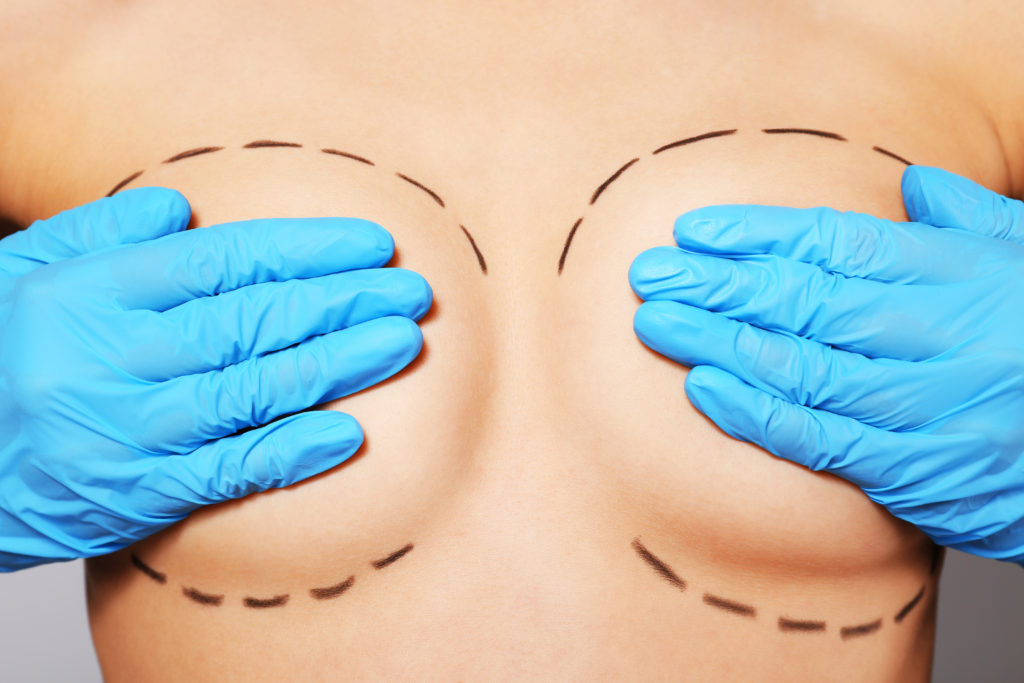

You may be a good candidate if you are generally healthy and have a breast implant complication, implant-related discomfort, breast asymmetry, implant malposition, rupture, rippling, or an aesthetic concern that you would like evaluated. Candidates should also have realistic expectations about what secondary surgery can accomplish.
Revision surgery is especially appropriate when the issue is structural or progressive rather than a temporary part of healing from a recent operation. Dr. Pfeifer also considers skin quality, scar tissue, implant history, and whether the tissues can safely support the desired correction.
Good candidates often have:
Breast revision may need to be postponed when a patient is still healing from recent surgery, is planning weight loss or pregnancy, has uncontrolled medical conditions, or uses nicotine and cannot stop as directed. Some concerns also improve with time and should not necessarily be revised too early.
Dr. Pfeifer may recommend additional imaging, medical evaluation, or observation before surgery depending on the concern. Careful timing is particularly important because unnecessary early reoperation can create additional scar tissue and tissue trauma.
You may need to wait if you:
Breast revision is performed according to the specific issue being corrected and may involve using an existing scar when appropriate. Dr. Pfeifer may remove or replace implants, select a different style implant, modify the implant pocket, treat scar tissue, reposition the implant, reshape breast tissue, or add fat grafting when indicated.
Some cases also require additional internal support or breast lifting to improve tissue position. The operative plan is determined before surgery but may also depend on what is found once the implant and capsule are directly evaluated.
The procedure may include:


See Breast Surgery Patient Results – visit Dr. Pfeifer’s Breast Surgery Before and After Photo Gallery
Breast revision before-and-after photos can help you understand how different problems such as implant malposition, asymmetry, capsular contracture, or tissue stretch may be corrected. The most useful examples are patients whose starting concerns are similar to your own.
Revision results should be evaluated carefully because every patient has a different surgical history and tissue condition. A patient correcting a ruptured implant may require a very different operation from someone treating bottoming out or severe capsular contracture.

Recovery depends on how extensive the revision is and whether additional procedures are performed. A simple implant exchange may involve a different recovery from capsulectomy, pocket reconstruction, breast lifting, or more complex tissue correction.
Many patients have an initial recovery of approximately one to two weeks, with activity gradually increasing over the following several weeks.
Recovery may include:
Breast revision recovery varies according to the amount of surgery performed. More complex revisions generally require more healing time than a straightforward implant exchange.
The timeline below is a general guide and should not replace individualized postoperative instructions.
The cost of breast implant revision in New York City varies because revision surgery is highly individualized. Pricing depends on the complexity of the correction, implant replacement, capsulectomy, pocket repair, breast lift, fat grafting, anesthesia, and facility fees.
An accurate fee can only be provided after Dr. Pfeifer evaluates the breast and determines which procedures are necessary. More complex revisions generally require more surgical time and planning than a straightforward implant exchange.
Cost may depend on:
The most important part of revision surgery is identifying why the previous result is unsatisfactory or why a complication developed. Correcting the implant alone may not be enough if the problem involves the skin, capsule, implant pocket, breast fold, or supporting tissues.
Patients should also understand that revision surgery may be more complex than primary augmentation and that additional scars or procedures may sometimes be necessary. A thoughtful plan should prioritize stability and tissue support rather than focusing only on immediate appearance.
Your breast revision guide should consider:
Yes, revision surgery can include changing to a larger or smaller implant when the tissues can safely support the new size. Implant dimensions should be chosen according to chest width, tissue quality, skin support, amount of cleavage and the desired breast shape.
Downsizing may require additional breast reshaping or a lift if the skin has stretched around a larger implant. Upsizing must also be approached carefully because additional implant weight can place more stress on compromised tissues.
Size changes may require:
Yes, breast implants can be removed without replacement. The appearance afterward depends on implant size, breast tissue, skin elasticity, implant duration, and whether the tissues have stretched.
Some patients are satisfied with implant removal alone, while others may benefit from a breast lift or fat grafting to improve shape. Dr. Pfeifer can explain what is realistic based on the existing breast tissues.
Options may include:
A breast lift may be needed when the breast skin or natural tissue has stretched, sagged, or changed around the implant. Replacing the implant alone does not correct significant breast ptosis.
Whether a lift is necessary depends on nipple position, skin quality, implant size, tissue support, and the desired result. Dr. Pfeifer evaluates these factors before deciding whether revision should include mastopexy.
A lift may be considered when there is:
Fat grafting may be used during breast revision to improve selected contour irregularities or increase soft-tissue coverage. Dr. Pfeifer’s current revision page specifically notes that fat grafting may be incorporated when appropriate.
Fat grafting is not a substitute for correcting a poorly positioned implant or unstable pocket. It is generally used as an additional contouring tool rather than the primary solution to structural implant problems.
Fat grafting may help with:
Breast revision results can be long-lasting, but implants and natural breast tissues continue to change over time. Aging, pregnancy, weight fluctuation, skin elasticity, implant wear, and scar tissue can all affect the breasts in the future.
Revision surgery should therefore be planned with long-term support in mind. No revision can guarantee that another breast procedure will never be needed.
Long-term appearance depends on:


Breast revision carries potential risks and complications, and the level of risk depends on the complexity of the operation and previous surgery. Scar tissue and altered anatomy can make some revision procedures more technically demanding than primary augmentation.
Potential risks should be discussed in detail before surgery. Dr. Pfeifer reviews the specific risks associated with implant exchange, capsulectomy, pocket repair, breast lifting, or other techniques included in the plan.
Potential risks may include:
Breast tissue, skin elasticity, weight, aging, and gravity continue to change after augmentation, so the relationship between the implant and the natural breast can evolve over time. Revision surgery may be considered when those changes affect symmetry, position, or overall proportion.
Yes. Capsular contracture, malposition, rupture, tissue stretching, and asymmetry can affect one breast more than the other. The surgical plan may therefore be different for each side rather than automatically treating both breasts identically.
The implant itself may be satisfactory while the surrounding breast tissue has stretched, sagged, or shifted. In that situation, revision may focus more on reshaping the breast, adjusting the pocket, or adding a lift than on changing the implant.
It can. Downsizing may leave excess skin or a stretched pocket, while upsizing can place additional stress on tissues that have already been altered by previous surgery. Implant size changes often need to be planned together with pocket support and breast shape.
Differences in pocket size, tissue support, scar formation, or implant position can allow one implant to shift more than the other. A revision consultation can help determine whether the movement is within a normal range or reflects pocket laxity that may need correction.
Sometimes. Visible or palpable implant edges may be improved with pocket adjustment, implant exchange, or fat grafting when appropriate, but the amount of natural tissue coverage plays an important role in what can realistically be achieved.
A bra can temporarily disguise differences in implant position, tissue support, or breast shape that become more noticeable without external support. Revision planning focuses on the underlying anatomy rather than how the breasts look only when supported.
Yes. Capsular contracture can recur even after treatment, which is why no revision technique can guarantee that it will never return. The surgical plan is individualized according to the severity of contracture, implant history, tissue quality, and previous procedures.
Potentially. A more natural appearance may come from improving implant position, pocket dimensions, tissue coverage, or breast shape rather than simply reducing implant volume. The best strategy depends on what is making the current result look less natural.
That is common, especially when surgery was performed many years ago. Any implant card, operative report, imaging, or prior medical records can be helpful, but Dr. Pfeifer can still begin the evaluation by examining your breasts and reviewing whatever information is available.
Dr. Pfeifer has extensive experience with complex breast revision surgery and evaluates both the implant and the surrounding tissues before recommending treatment. Her approach emphasizes individualized planning, careful evaluation of the implant and surrounding tissues, and realistic long-term treatment goals. Depending on the problem, revision surgery may involve correction of capsular contracture, implant malposition, asymmetry, rippling, implant size concerns, and prior surgical scarring.
Patients seeking revision often need both technical correction and clear guidance about what can realistically be improved. Dr. Pfeifer’s approach emphasizes careful surgical judgment, natural-looking proportion, tissue preservation, and long-term support.
Patients may value her focus on:
A consultation is the best way to determine what is causing the current problem and which revision strategy may be appropriate. Dr. Pfeifer will review your previous surgery, implants, breast tissue, scar capsule, implant pocket, and aesthetic goals before recommending treatment.
Patients considering breast implant revision in NYC, Manhattan, Long Island, Quogue, or the Hamptons can contact Pfeifer Aesthetic Plastic Surgery to schedule a private consultation. Dr. Pfeifer currently sees patients in New York City and Quogue.
Your next steps are:
Your journey to resolving implant issues and achieving the results you deserve begins with a personal consultation with Dr. Pfeifer. During this meeting, she’ll listen to your concerns, evaluate your current situation, and help you determine the best approach for your breast revision.